Tuesday, September 11, 2007

Truck Drivin' Man


Last week we heard a couple of trucker songs played by west coast hippies. Today we'll listen to the genuine article, and some cover versions it spawned.


In 1954 Terry Fell recorded this, the first version of the second most popular truck driving song ever (third maybe if you count "Convoy"). The first, would be Dave Dudley's "Six Days On The Road," and wouldn't come for another decade or so, so this very important record jump started a genre that has rocked the interstates for more than half a century.


Download:

"Truck Drivin' Man" mp3
by Terry Fell and The Fellers, 1954.
available on Truck Driver's Boogie, Big Rig Hits 1939-1969

"Truck Drivin' Man" mp3
by Buck Owens and His Buckaroos, 1964
available on Together Again/My Heart Skips A Beat

"Truck Drivin' Man" mp3
by Red Simpson, 1966.
available on Roll, Truck, Roll

"Truck Drivin' Man" mp3
by Don Walser, 1996.
availlable on Rig Rock Deluxe

"Truck Drivin' Man" mp3
by James Luther Dickinson, 2006.
available on Jungle Jim and the Voodoo Tiger


Download:

"Don't Drop It" mp3
by Terry Fell and The Fellers, 1954.
available on Truck Drivin' Man

"Don't Drop It" mp3
by Wilbert Harrison, 1957.
available on Kansas City

"Don't Drop It" mp3
by Jerry Lee Lewis 1963 (?)
available on Sun Essentials

top photograph © Ted Barron, 2002.

Friday, September 7, 2007

And now a word from Homer and Jethro...


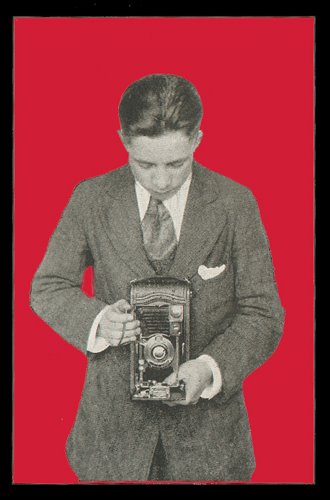
As you may have heard, the great tenor Luciano Pavarotti passed away this week. I know next to nothing about opera, but Homer and Jethro did - as evidenced in this recording with Spike Jones from 1950. This predates Hee Haw, The Beverly Hillbillies, and Tommy and Bob Stinson (who apparently modeled themselves from the above photograph) by many years.

Listen closely, this is genius.

Download: "Pal-Yat-Chee" mp3
by Spike Jones & his City Slickers with Homer and Jethro, 1950.
available on Spiked! The music of Spike Jones

*****************************************
Also:


Download: "Don't Let The Stars Get In Your Eyeballs" mp3
by Homer and Jethro, 1952.


Download: "Unhappy Day" mp3
by Homer and Jethro, 1952.

buy music by Homer and Jethro at Amazon
or at your local independently owned record store

Tuesday, September 4, 2007

Tehachapi to Tonopah

Sometimes a song will make you do foolish things.

Over the years I've driven many American roads making photographs. Partially inspired by Robert Frank's The Americans and partially by Jack Kerouac's On The Road, which I'm currently re-reading for the first time since I was a teenager in its "restored" single paragraph scroll version. Not to mention my favorite film genre- the road movie. On all of these drives, music has been central to my relationship to wherever I am - sometimes by accident and sometimes quite deliberately.

One of my favorites for California has always been the first Little Feat record, which contains two truck driving songs by the late Lowell George: "Truck Stop Girl" and "Willin,'" the latter of which inspired me last week to drive from Tehachapi to Tonopah. I know, I know.

I don't know yet if the photographs are gonna be any good, but I do believe I've exorcised from my obsessive self the need to do this again. I found some lovely scenery out there in the empty spaces between Tehachapi, CA. (quaint small western town) and Tonopah, NV. (decrepit dying one-horse casino town,) but quickly found myself hightailing it to Yosemite to cleanse my palate.

Anyway, below are a few versions of each of these numbers. Little Feat recorded "Willin'" twice in the studio on each of their first two records. The first version features Ry Cooder on guitar, and the second is anchored by Bill Payne on the piano and Sneaky Pete Kleinow on pedal steel. Also, a radio broadcast of Lowell George joined by Linda Ronstadt on harmony vocal, and Steve Earle's version with the Bluegrass Dukes. Then, It's "Truck Stop Girl" by Little Feat, Kelly Willis, and my favorite version by the Byrds, who also have a live version of "Willin''' but I've excluded it because I've always found the vocals to be a little weak.

Okay, here goes...


Download:

"Willin'" mp3
by Little Feat
from Little Feat, 1971.

"Willin'" mp3
by Little Feat
from Sailing Shoes, 1972.

"Willin'" mp3
by Lowell George with Linda Ronstadt
from WHFS-FM Radio Broadcast, 1974.

"Willin'" mp3
by Steve Earle
from SideTracks, 2002.

"Truck Stop Girl" mp3
by Little Feat
from Little Feat, 1971.

"Truck Stop Girl" mp3
by Kelly Willis
from Rig Rock Deluxe, 1996.

"Truck Stop Girl" mp3
by The Byrds
from Untitled, 1970.

**********************************************
***************** BONUS *********************
**********************************************
Download:
"The Heart of California (for Lowell George)" mp3
by Terry Allen and the Panhandle Mystery Band
from Smokin' The Dummy, 1980.

**********************************************
**********************************************

Thursday, August 23, 2007

Gone Fishin'


I'm taking a break here in Fluville until Labor Day.

I'm going out to California to visit my sisters and some friends that I never see, accompany my girlfriend while she plays a few gigs out there, and work on a project that I've had on the back burner for quite some time. All this with a broken toe.

So, I'll leave you with a few records by Lightnin' Hopkins. That's not so bad, is it?


Download: "My California" mp3
by Lightnin' Hopkins, 1948.
Available on The Complete Aladdin Recordings.


Download: "Fishing Clothes" mp3
by Lightnin' Hopkins, 1965.
Available on Fishing Clothes: The Jewel Recordings 1965-1969.

Monday, August 20, 2007

Max Roach


"Art is a powerful weapon that society, or the powers that be, use to control or direct the way people think. Culture is used to perpetuate the status quo of a society. Even though I'm involved in music for the sake of entertainment, I always hope to offer some kind of enlightenment."

-Max Roach 1924-2007


Download: "Woodyn' You" mp3
Coleman Hawkins and his Orchestra
Recorded February 16, 1944.


Download: "Disorder At The Border" mp3
Coleman Hawkins and his Orchestra
Recorded February 22, 1944.


Download: "Ko Ko" mp3
Charlie Parker's Ri Bop Boys
Recorded November 26, 1945.


Download: "Klactoveedsedstene" mp3
Charlie Parker Quintet
Recorded November 4, 1947.


Download: "Marmaduke" mp3
Charlie Parker's All Stars
Recorded September 24, 1948.

Max Roach photograph: © William P. Gottlieb

Buy Max Roach music at Amazon
or at your local independently owned record store.
Coleman Hawkins sides available on: Rainbow Mist
Charlie Parker sides available on
The Complete Savoy and Dial Studio Recordings 1944-1948

Thursday, August 16, 2007

TCB (in a flash)


Well, It's thirty years and Elvis is still dead.

The first time I was in Memphis for Death Week, I asked everyone I met if they had an Elvis story. I heard some good ones, but by far the best was from a bartender at the P and H Cafe.

He told me he had a friend that worked at the morgue in Memphis. He said when they brought in the bodies they all got tagged as usual, with the ceremonious big toe label containing their name, time and cause of death, and whatever information those tags usually carry.

All except one body, whose tag simply read...

ELVIS


Download: "Just Because" mp3


Download: "All Shook Up" mp3


Download: "Treat Me Nice" mp3


Download: "Too Much" mp3


Download: "Jailhouse Rock" mp3


Download: "Don't Be Cruel" mp3

Buy Elvis Presley music at Amazon
or at your local independently owned record store

Photograph: © Ted Barron All Shook Up, Memphis TN, 1988.

Wednesday, August 15, 2007

Elvis 1969


In the very first post here on the Boogie Woogie Flu, we listened to some records that more than likely Elvis had in his record collection. Today we'll do the same, with a few of the tracks Elvis recorded on The Memphis Record in 1969 - the greatest recordings and best batch of songs he cut outside of his Sun sessions. Elvis, fearing he'd lost his vitality with the younger portion of the record buying public, returned to Memphis to make this record with the very hot American Studio house band, produced by "Chips" Moman. Neil Diamond had been at American the previous year to record "Brother Love's Traveling Salvation Show"and "Sweet Caroline." Dusty Springfield would be in after Elvis (I think) to record Dusty In Memphis, as were a cavalcade of other stars preceding and following Elvis's sessions including Wilson Pickett, Aretha Franklin, Paul Revere and the Raiders, Dionne Warwick, The Box Tops, James Carr and B.J. Thomas. They were churning out the hits. The Memphis strategy worked for Elvis and he had three top ten hits from this record, including "Suspicious Minds" which was his first #1 since 1962. So, let's boldly spin the axis of Elvis and listen to some tracks from The Memphis Record, some artists who recorded these songs first, and the some post-Elvis versions.

Please enjoy.

Download:

"Any Day Now" mp3
"Suspicious Minds" mp3
"Long Black Limousine" mp3
"I'm Movin' On" mp3
"Gentle On My Mind" mp3
"True Love Travels on A Gravel Road" mp3

Elvis Presley
from The Memphis Record, 1969.
Buy at Amazon or at your local independently owned record store.

Download:

"Any Day Now" mp3
by Chuck Jackson
available on The Very Best of Chuck Jackson 1961-1967

"Suspicious Minds" mp3
by Waylon Jennings and Jessi Colter, 1976.
available on Wanted! The Outlaws

"Long Black Limousine" mp3
by Wynn Stewart, 1958.
available on California Country

"I'm Movin' On" mp3
by Hank Snow, 1950.
available on RCA Country Legends

"Gentle On My Mind" mp3
by Glen Campbell, 1967.
available on Gentle On My Mind

"True Love Travels on a Gravel Road" mp3
by Nick Lowe, 1994.
available on The Impossible Bird

***********************************************************************
Bonus:

Yet another (and maybe the best) version of Joe South's classic, also recorded at American Studio with "Chips" Moman and company. Brenda Lee recorded the great country soul LP Memphis Portrait there on the heels of Dusty In Memphis. Pick it up if you can find a copy.

"Walk a Mile In My Shoes"
mp3
by Brenda Lee, 1970.
available on Memphis Portrait
Out of Print

***********************************************************************
For more on American Studio in Memphis TN,
check out the Soulful Music blog.

Tuesday, August 14, 2007

There's a Guy Works Down the Chip Shop Swears He's Elvis


Alright, the Elvis Week madness continues. First up, a song that references a liar with delusions of grandiosity by the late great Kirsty MacColl and backed by some members of Rockpile. Then, a trio of numbers about Elvis in life and in death.

Download:

"There's a Guy Works Down the Chip Shop Swears He's Elvis" mp3
by Kirsty MacColl
from Desperate Character, 1981. Out of Print
available on Galore.

"Went To See The Gypsy" mp3
by Bob Dylan
Demo from New Morning.
different version available on New Morning , 1970.

"Johnny Bye Bye" mp3
by Bruce Springsteen
Outtake from Born In The USA, 1984.
different version available on Tracks.

"Elvis Presley Blues" mp3
by Gillian Welch
from Time (The Revelator), 2001.

Photograph © Ted Barron, Untitled, Memphis, TN 2002.

Monday, August 13, 2007

Walk A Mile In My Shoes


If you find yourself in Memphis this week, you may come to the realization that "Elvis is everywhere," and indeed he is. It's Elvis Week, or as Memphians commonly refer to it Death Week. Every year at this time Elvis fans flock to Memphis like pilgrims to pay their respect to the King. There are special events, concerts, conferences and the International Elvis Impersonator Contest. This is the 30th Anniversary of Elvis' untimely demise. I attended and photographed the 20th and 25th, and one in between. I considered going back again, but feel that my work there is done, and there's nothing more I can add. The whole thing has an air of reverence, but is mixed with extreme and at times nauseating campiness. It was a very difficult photographic assignment I gave to myself, as I wasn't so interested in exploiting the subject matter, as that would have been too easy, but was nearly impossible to resist. After all, I'm an Elvis fan too.

With the passage of time, the legacy of Elvis has been tainted by two things, the grotesque: which is fully on display in the cheap souvenir shops on Elvis Presley Blvd, and racism: which Peter Guralnick so eloquently addresses in this Op-Ed piece from The New York Times. No one writes better or with more empathy on the subject of Elvis than Guralnick.

Download: "Walk A Mile in My Shoes" mp3 by Joe South
available on: Anthology: A Mirror of His Mind - Hits and Highlights

Download: "Walk A Mile In My Shoes" mp3 by Elvis Presley
available on: Walk a Mile in My Shoes: The Essential 70's Masters.

Download: "Men With Broken Hearts" mp3 by Luke the Drifter
available on: Beyond The Sunset Hank Williams as Luke the Drifter.


From The New York Times:


How Did Elvis Get Turned Into a Racist?


ONE of the songs Elvis Presley liked to perform in the ’70s was Joe South’s “Walk a Mile in My Shoes,” its message clearly spelled out in the title.

Sometimes he would preface it with the 1951 Hank Williams recitation “Men With Broken Hearts,” which may well have been South’s original inspiration. “You’ve never walked in that man’s shoes/Or saw things through his eyes/Or stood and watched with helpless hands/While the heart inside you dies.” For Elvis these two songs were as much about social justice as empathy and understanding: “Help your brother along the road,” the Hank Williams number concluded, “No matter where you start/For the God that made you made them, too/These men with broken hearts.”

In Elvis’s case, this simple lesson was not just a matter of paying lip service to an abstract principle.

It was what he believed, it was what his music had stood for from the start: the breakdown of barriers, both musical and racial. This is not, unfortunately, how it is always perceived 30 years after his death, the anniversary of which is on Thursday. When the singer Mary J. Blige expressed her reservations about performing one of his signature songs, she only gave voice to a view common in the African-American community. “I prayed about it,” she said, “because I know Elvis was a racist.”

And yet, as the legendary Billboard editor Paul Ackerman, a devotee of English Romantic poetry as well as rock ’n’ roll, never tired of pointing out, the music represented not just an amalgam of America’s folk traditions (blues, gospel, country) but a bold restatement of an egalitarian ideal. “In one aspect of America’s cultural life,” Ackerman wrote in 1958, “integration has already taken place.”

It was due to rock ’n’ roll, he emphasized, that groundbreaking artists like Big Joe Turner, Ray Charles, Chuck Berry and Little Richard, who would only recently have been confined to the “race” market, had acquired a broad-based pop following, while the music itself blossomed neither as a regional nor a racial phenomenon but as a joyful new synthesis “rich with Negro and hillbilly lore.”

No one could have embraced Paul Ackerman’s formulation more forcefully (or more fully) than Elvis Presley.

Asked to characterize his singing style when he first presented himself for an audition at the Sun recording studio in Memphis, Elvis said that he sang all kinds of music — “I don’t sound like nobody.” This, as it turned out, was far more than the bravado of an 18-year-old who had never sung in public before. It was in fact as succinct a definition as one might get of the democratic vision that fueled his music, a vision that denied distinctions of race, of class, of category, that embraced every kind of music equally, from the highest up to the lowest down.

It was, of course, in his embrace of black music that Elvis came in for his fiercest criticism. On one day alone, Ackerman wrote, he received calls from two Nashville music executives demanding in the strongest possible terms that Billboard stop listing Elvis’s records on the best-selling country chart because he played black music. He was simply seen as too low class, or perhaps just too no-class, in his refusal to deny recognition to a segment of society that had been rendered invisible by the cultural mainstream.

“Down in Tupelo, Mississippi,” Elvis told a white reporter for The Charlotte Observer in 1956, he used to listen to Arthur Crudup, the blues singer who originated “That’s All Right,” Elvis’s first record. Crudup, he said, used to “bang his box the way I do now, and I said if I ever got to the place where I could feel all old Arthur felt, I’d be a music man like nobody ever saw.”

It was statements like these that caused Elvis to be seen as something of a hero in the black community in those early years. In Memphis the two African-American newspapers, The Memphis World and The Tri-State Defender, hailed him as a “race man” — not just for his music but also for his indifference to the usual social distinctions. In the summer of 1956, The World reported, “the rock ’n’ roll phenomenon cracked Memphis’s segregation laws” by attending the Memphis Fairgrounds amusement park “during what is designated as ‘colored night.’”

That same year, Elvis also attended the otherwise segregated WDIA Goodwill Revue, an annual charity show put on by the radio station that called itself the “Mother Station of the Negroes.” In the aftermath of the event, a number of Negro newspapers printed photographs of Elvis with both Rufus Thomas and B.B. King (“Thanks, man, for all the early lessons you gave me,” were the words The Tri-State Defender reported he said to Mr. King).

When he returned to the revue the following December, a stylish shot of him “talking shop” with Little Junior Parker and Bobby “Blue” Bland appeared in Memphis’s mainstream afternoon paper, The Press-Scimitar, accompanied by a short feature that made Elvis’s feelings abundantly clear. “It was the real thing,” he said, summing up both performance and audience response. “Right from the heart.”

Just how committed he was to a view that insisted not just on musical accomplishment but fundamental humanity can be deduced from his reaction to the earliest appearance of an ugly rumor that has persisted in one form or another to this day. Elvis Presley, it was said increasingly within the African-American community, had declared, either at a personal appearance in Boston or on Edward R. Murrow’s “Person to Person” television program, “The only thing Negroes can do for me is buy my records and shine my shoes.”

That he had never appeared in Boston or on Murrow’s program did nothing to abate the rumor, and so in June 1957, long after he had stopped talking to the mainstream press, he addressed the issue — and an audience that scarcely figured in his sales demographic — in an interview for the black weekly Jet.

Anyone who knew him, he told reporter Louie Robinson, would immediately recognize that he could never have uttered those words. Amid testimonials from black people who did know him, he described his attendance as a teenager at the church of celebrated black gospel composer, the Rev. W. Herbert Brewster, whose songs had been recorded by Mahalia Jackson and Clara Ward and whose stand on civil rights was well known in the community. (Elvis’s version of “Peace in the Valley,” said Dr. Brewster later, was “one of the best gospel recordings I’ve ever heard.”)

The interview’s underlying point was the same as the underlying point of his music: far from asserting any superiority, he was merely doing his best to find a place in a musical continuum that included breathtaking talents like Ray Charles, Roy Hamilton, the Five Blind Boys of Mississippi and Howlin’ Wolf on the one hand, Hank Williams, Bill Monroe and the Statesmen Quartet on the other. “Let’s face it,” he said of his rhythm and blues influences, “nobody can sing that kind of music like colored people. I can’t sing it like Fats Domino can. I know that.”

And as for prejudice, the article concluded, quoting an unnamed source, “To Elvis people are people, regardless of race, color or creed.”

So why didn’t the rumor die? Why did it continue to find common acceptance up to, and past, the point that Chuck D of Public Enemy could declare in 1990, “Elvis was a hero to most... straight-up racist that sucker was, simple and plain”?

Chuck D has long since repudiated that view for a more nuanced one of cultural history, but the reason for the rumor’s durability, the unassailable logic behind its common acceptance within the black community rests quite simply on the social inequities that have persisted to this day, the fact that we live in a society that is no more perfectly democratic today than it was 50 years ago. As Chuck D perceptively observes, what does it mean, within this context, for Elvis to be hailed as “king,” if Elvis’s enthronement obscures the striving, the aspirations and achievements of so many others who provided him with inspiration?

Elvis would have been the first to agree. When a reporter referred to him as the “king of rock ’n’ roll” at the press conference following his 1969 Las Vegas opening, he rejected the title, as he always did, calling attention to the presence in the room of his friend Fats Domino, “one of my influences from way back.” The larger point, of course, was that no one should be called king; surely the music, the American musical tradition that Elvis so strongly embraced, could stand on its own by now, after crossing all borders of race, class and even nationality.

“The lack of prejudice on the part of Elvis Presley,” said Sam Phillips, the Sun Records founder who discovered him, “had to be one of the biggest things that ever happened. It was almost subversive, sneaking around through the music, but we hit things a little bit, don’t you think?”

Or, as Jake Hess, the incomparable lead singer for the Statesmen Quartet and one of Elvis’s lifelong influences, pointed out: “Elvis was one of those artists, when he sang a song, he just seemed to live every word of it. There’s other people that have a voice that’s maybe as great or greater than Presley’s, but he had that certain something that everybody searches for all during their lifetime.”

To do justice to that gift, to do justice to the spirit of the music, we have to extend ourselves sometimes beyond the narrow confines of our own experience, we have to challenge ourselves to embrace the democratic principle of the music itself, which may in the end be its most precious gift.


Peter Guralnick is the author of Careless Love: The Unmaking of Elvis Presley.

Photograph: Vigil #1 (Elvis Death March) Memphis TN, 2002.
© Ted Barron

Friday, July 27, 2007

George Jones on Musicor


Will the real George Jones please stand up?

Alright, well we heard a young and most likely drunk George Jones doing his best Elvis impersonation in the last post. The things that a young artist must do for a few bucks are sometimes a little degrading. Anyway, George Jones is arguably the greatest country singer of all time. His voice is as unique and soulful as Al Green or Van Morrison. He has many imitators himself, but "Possum" is the real deal. There are hundreds of CD's available by him and few box sets, but my favorite period of George's is not as well represented as others. After cutting rockabilly and honky tonk sides for Starday, Mercury, and United Artists in the fifties and early sixties, and before he moved to Epic to record his signature overblown masterpieces of hurt with Billy Sherrill, George recorded for a label called Musicor (1965-1971), which was partially owned by his longtime manager and producer "Pappy" Daily. These are, I think, his best recordings and have yet to see a proper comprehensive collection. The first of todays mp3s come from an out of print Rounder LP from 1983. My favorite song, "Burn The Honky Tonk Down," written by his guitar player Wayne Kemp, has never been released on any CD. It's a killer 3/4 tale with sawing fiddles about a guy who works in a sawmill cutting timber to " build another honky-tonk wall", while his wife spends his his money in town carousing with the customers between those very honky tonk walls. This is the kind of song that George Jones sings better than anyone. Also, a few more tracks where that came from, a couple of my favorite Musicor singles, and some cover versions of these songs.

Please enjoy...


Download:

"Burn The Honky Tonk Down" mp3

"Where Grass Won't Grow" mp3

"Your Angel Steps Out Of Heaven" mp3

"Feeling Single-Seeing Double" mp3

From Burn The Honky Tonk Down, Rounder Records, 1983.
Out of Print


Download: "Heartaches And Hangovers" mp3


Download: "Ship Of Love" mp3


********************* BONUS *********************

"Your Angel Steps Out Of Heaven" mp3
by The Flying Burrito Brothers, 1970.
available on Sleepless Nights

"Burn The Honky Tonk Down" mp3
by The Meat Puppets, 1986.
available on Out My Way

"Feeling Single Seeing Double" mp3
by Emmylou Harris And The Hot Band, 1975
live recording not commercially available

Buy George Jones music at Amazon
or at your local independently owned record store.

George Jones photograph by Lee Friedlander
from American Musicians, D.A.P. © 1998.

Thursday, July 26, 2007

Who Are The Mystery Guests?


Warning: this post requires audience participation

Below are two tracks released on the Tops record label. Tops was a budget label that recorded sound-a-likes of hit songs. They sold their merchandise in drugstores and Woolworths to undiscerning record buyers. Here we have an artist known as Hank Smith singing Elvis' then current hit, "Heartbreak Hotel," and another artist known as "Scat" Benny doing the one thousand and oneth version of "Rock Island Line." These are not the real names of these singers and both are well known on their own. Tops attached the name Hank Smith to various releases of country and rockabilly records, all featuring different singers. (The version of "Blue Suede Shoes" on this record is by a different Hank Smith than on "Heartbreak Hotel" and not as interesting, so I'm not including an mp3 of it.

Can you guess who are the mystery guests?

Use the comments to submit your answer.
Humor me... please.

Googlers need not apply.


Download: "Rock Island Line" mp3 by "Scat" Benny


Download: "Heartbreak Hotel" mp3 by Hank Smith

Tuesday, July 24, 2007

Pete "Guitar" Lewis


I've been wanting to do a Johnny Otis post here since I started this thing. However, I've concluded it's just too daunting a task. Among being a bandleader, DJ, civil rights activist, dad to Shuggie Otis, nightclub owner and A&R guy, Johnny Otis has been influential in nearly every kind of music posted here at the Flu. Well, maybe not the hillbilly stuff, but he did write "Crazy Country Hop."

Instead, today we'll focus on one of his many great sidemen, Pete "Guitar" Lewis, a little celebrated but great guitar player who made way too few recordings, and most of them are as a member of Johnny Otis' band. Lewis was Otis' guitar player from 1948 to 1957. Below we have one of his solo recordings on Federal (the b-side of this record is by Pete "Harmonica" Lewis, where he displays his formidable talent on another instrument), A couple of sides with the Johnny Otis Orchestra, and one with the same band backing "Big Mama" Thornton. You can also hear PGL on the original version of "Hound Dog" at this post.

Dig it...


Download: "Shake It" 1952, mp3


Download: "I Smell A Rat" 1952, mp3.


Download: "Freight Train Boogie" 1950, mp3.


Download: "Raggedy Blues" 1952, mp3.

Buy music by Pete "Guitar" Lewis, "Big Mama Thornton", and Johnny Otis
at Amazon or your local independently owned record store.

Wednesday, July 11, 2007

Get 'em while you can...


Hey folks, I've been doing this for six months now. Unlike other blogs, there are a full six months of active mp3 links available here. Soon, I'll need to start removing some of the older links to make room for other stuff. So, if there's anything in the archives that you think you may want to download, do it soon. I'll return with some more music later this week. In the meantime, dig the archives. The January archive mp3s will be gone by the end of the month, and then February, and then...

Saturday, July 7, 2007

Seven


Today is 07/07/07.

Here are seven seven songs.

Numerology will cease in Fluville until further notice.

"The Magnificient Seven" by The Clash
from Sandinista, 1980.

"7 and 7 Is" by Love
from Da Capo, 1966.

"Seven Days" by Ron Wood
from Gimme Some Neck, 1979.

"Seven Lonely Days" by Patsy Cline
from The Patsy Cline Story, 1961.

"Seven Curses" by Bob Dylan
the Witmark Years, 1963.

"Seven Year Ache" by Golden Smog featuring Rosanne Cash
from Until You Came Along, 1995

"The Seventh Son" by Mose Allison
from Mose Allison Sings, 1959.

************** BONUS ***************

"Seven" by Bob Dylan
from Theme Time Radio Hour 33 Countdown, 2006.

"Stereo Sanctity" by Sonic Youth
from Sister. 1987.

"(I'm Your) Hoochie Coochie Man" by Muddy Waters
from His Best: 1947-1955, 1955.

Wednesday, July 4, 2007

Louis Armstrong & His Hot Seven


Here's a pair of hot sides from Pops himself, who celebrated his birthday today, July 4th. His actual birthday was on August 4th, but he didn't know it and it wasn't discovered until years after his death when his actual birth certificate surfaced. I like the idea of celebrating his birthday on the on the same day as the U.S.A.'s. Check out Johnny St. Cyr's guitar break on "Willie The Weeper."

Here you go...


Download: "Willie The Weeper" mp3


Download: "Weary Blues" mp3

Buy music by Louis Armstrong & His Hot Seven at Amazon
or at your local independently owned record store.

Monday, July 2, 2007

Almost Independence Day


However you may feel about it in a time war, it is almost Independence Day. I love watching the fireworks, despite whatever connotations they may carry. Also, I love these songs. I may be taking a break from the antiquities here at the flu, or at least sprinkling them with some slightly more contemporary selections, although these are hardly current. Below, we have Van Morrison's prelude to the holiday; an outtake from my favorite summertime LP: The Wild, The Innocent and the E Street Shuffle; and two versions of "The 4th of July" - one by its composer Dave Alvin, and a demo version by X.

Fire up the bar-b-q and some bottle rockets too...

Download:

"Almost Independence Day"
mp3 by Van Morrison
available on Saint Dominick's Preview, 1972.

"4th of July, Asbury Park (Sandy) Alternate Take" mp3
by Bruce Springsteen
available on The Wild, The Innocent, and the E Street Shuffle, 1973.

"Fourth of July"
mp3 by Dave Alvin
available on Romeo's Escape, 1987.

"4th of July" demo version mp3 by X
available on Beyond And Back: The X Anthology, 1986.


Photograph: © Robert Frank, Parade, Hoboken, New Jersey 1955.

Tuesday, June 26, 2007

Mule Skinner


Download: "Mule Skinner Blues" mp3


Then I heard this horrible crazy sound. And I felt this insane mad feeling. Neither of which was I in any manner acquainted. It was the bluesiest and most obnoxious thing I had ever heard. It was an attack of revolutionary terrorism on my nervous system through aesthetics.

It was blacker than the blackest black record I had ever heard. It reached out and grabbed and it has never let go of me.

I went limp. I almost fell off the sofa. My mouth fell open. My eyes widened and expanded. I found myself hyperventilating. When it was over I tried to get up and go and get a paper bag to restore the correct balance of power between oxygen and carbon monoxide. I screamed for help but nobody was around and nobody came. I was drenched with sweat. It was like I had woken up to a new and thrilling exciting horror movie.

Nothing has ever been the same since then.

You see, I had gone insane.

And I didn't even know about it.

Wow.

I had to hear that record again. It was madness and I knew it would get me in trouble and it did get me in trouble but I couldn't help it I was out of control.

So I went to the record store in Silver Spring, Maryland, the name of which I forgot. It was at the intersection of Georgia Avenue, and Colesville Road.

Right around the corner from the Silver Theatre.

I asked the man behind the counter about that record. He was a "nice guy." He looked it up in some great big yellow catalogue and actually found it.

But, it was out of print. And there wasn't one on the shelf.

"Sorry, kid, I don't have one and I can't get you one."

"But, I've got to hear it again. I've got to."

"Listen kid" he went on. "that record is no good. In fact it is evil. It caused a lot of trouble while it was around. Women left their husbands. Husbands left their wives. Children ran away from home and were never seen again. There were sunspots on the moon. Revolutions started, massacres happened, suicides and alcoholism went sky high, wars started, monsters were seen on the Edge, it was bad kid. Maybe it would be better for you if you didn't hear it again. I mean I just feel I gotta' tell ya' that kid. It's dangerous for anybody your age to get interested in things like that."

"I don't care," I said, "it must be fate."

"Fate schmate. I gave you a warning. But if ya' don't take it the only thing I can do is tell ya' this. You gotta' find a record collector. Chances are a record collector would know about it."

"You know any of those guys you are talking about?" I asked.

"No, I don't hang out with weirdos like that. But they're around. And I'll pray for ya' kid. I'll pray for ya."

"Thanks a hell of a lot. I may need it."

"Oh, you're gonna need it alright."

From How Bluegrass Music Destroyed My Life by John Fahey
Drag City © 2000

Locust St. is at it again. If you haven't checked out Chris' exhaustive posts on 7 Means of Movement, do yourself a favor. This post is an addendum to his Interlude 2: Asses and Mules. While it feels to me a little cheap to riff of of his painstakingly epic work, I couldn't
resist posting this Bill Monroe track which I've been wanting to put up for a while. The "horrible crazy sound" that John Fahey so passionately describes in the above excerpt from his book, actually refers to the other side of the original issue of this record. My copy, however is a DJ Promo backed with a godawful track by Elton Britt. Both of these songs come from Jimmie Rodgers.

Here's the flip:

Download: "Blue Yodel No. 7 (Anniversary Yodel) " mp3
by Bill Monroe and his Blue Grass Boys, 1939.

Buy music by Bill Monroe and his Blue Grass Boys at Amazon
or at your local independently owned record store.

Friday, June 22, 2007

The Stanley Brothers


Shifting gears again. While it may seem to some of you that these rapid genre shifts here in Fluville are extreme, they are indeed not. Basically, most everything here is 20th century American music, which means to say it is all in some way derivative of the blues. So, with that being said, it doesn't really matter if it's Benny Carter or Carter Stanley - as long as it is good. Today, it's The Stanley Brothers, from 1953. This music is so good it hurts. Ralph Stanley is playing tonite at the Prospect Park Bandshell in Brooklyn.


Download: "(Say) Won't You Be Mine" mp3


Download: "Our Last Goodbye" mp3

Stanley Brothers Photograph by John Cohen, 1961.
from There Is No Eye, Powerhouse Books, © 2000.

Buy music by The Stanley Brothers at Venerable Music